
HEY, HEY…HAY!
Winter Feed for Goats
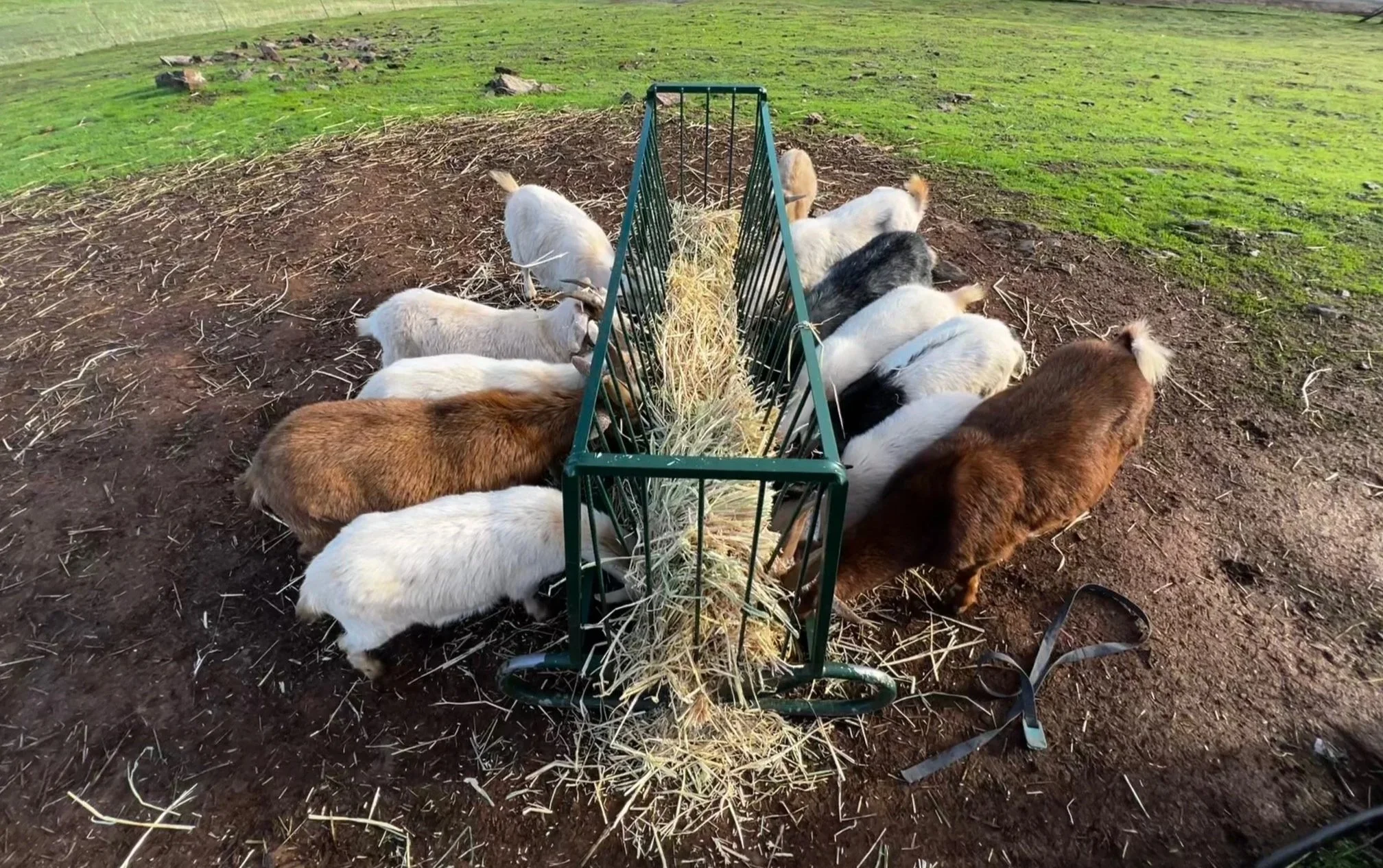
Our goat crew enjoying some much needed supplemental hay feed during winter.
If you keep goats for brush-clearing and wildfire risk reduction, the land will be mostly bare during winter. This condition will reduce the amount of food available for these animals. Also, the rain won’t let goats graze as much as they please. All this means that human intervention will be required to keep the herd happily fed. Having access to the right quality and quantity of feed will help your goats stay healthy and satisfied as the new grass starts to grow.
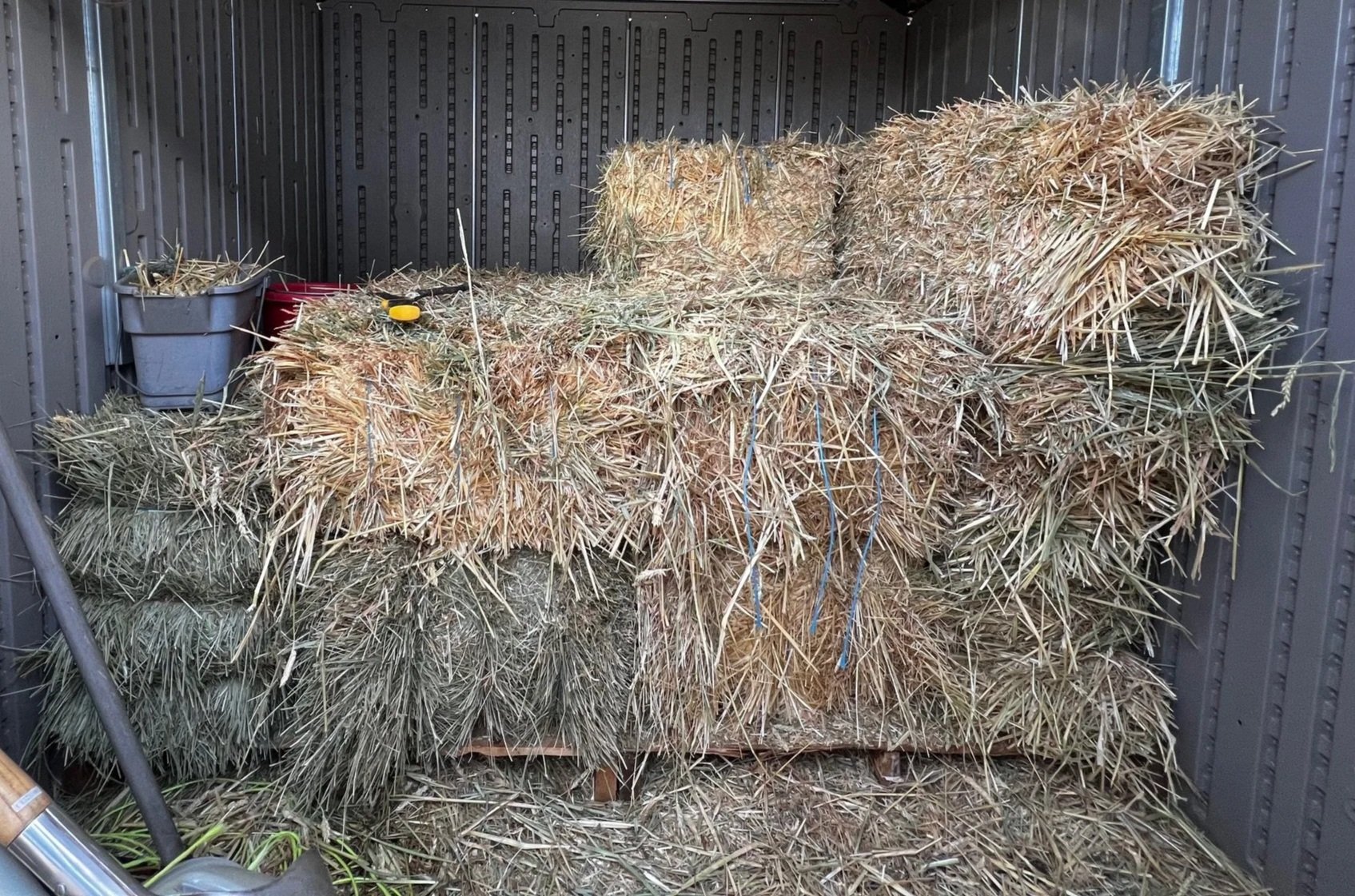
It is important to keep the piles of hay protected from the sun or rain to avoid mold or quick deterioration.
The right type of hay will depend on your type of goat. Beside hay, goats will need additional sources to obtain the nutrients, vitamins, and fiber to help them remain in good health. Here is a list of some essential elements for their feed:
-
Hay will be the primary source of nutrition for your goats during the cold winter months. The type of hay will depend on if your goat is used for meat, dairy, is lactating or is used for land-clearing. At Dottie’s Goat Farm, our goats are raised for grazing, so we use a mixture of pasture grass hay, oat, and wheat. We only use alfalfa to feed the does when they are lactating or need an additional boost. Avoid feeding alfalfa to male goats because the high calcium content can produce kidney stones. Equally important as the quality of the hay is the quantity. Consider this measurement provided by Laura Childs in her book The Joy of Keeping Goats, “A goat will consume 3 to 10 percent of their body weight daily” (108). Therefore, make sure to store as much hay as possible.
-
Selenium is not present in the fields of Amador County. In fact, “Many areas of North America have soil that is depleted in minerals and nutrients,” Childs (112). Therefore, mineral or salt blocks containing selenium, calcium, zinc, and other minerals are necessary to supplement a goat’s diet.
-
If you happen to have excess or leftover produce, feed them to the goats. Especially for dairy goats, “Minute amounts of green beans, turnips, pumpkins, beets, cabbages, and carrots, or a chopped apple or pear are favorites,” Childs (112). Just remember to feed them in moderation.
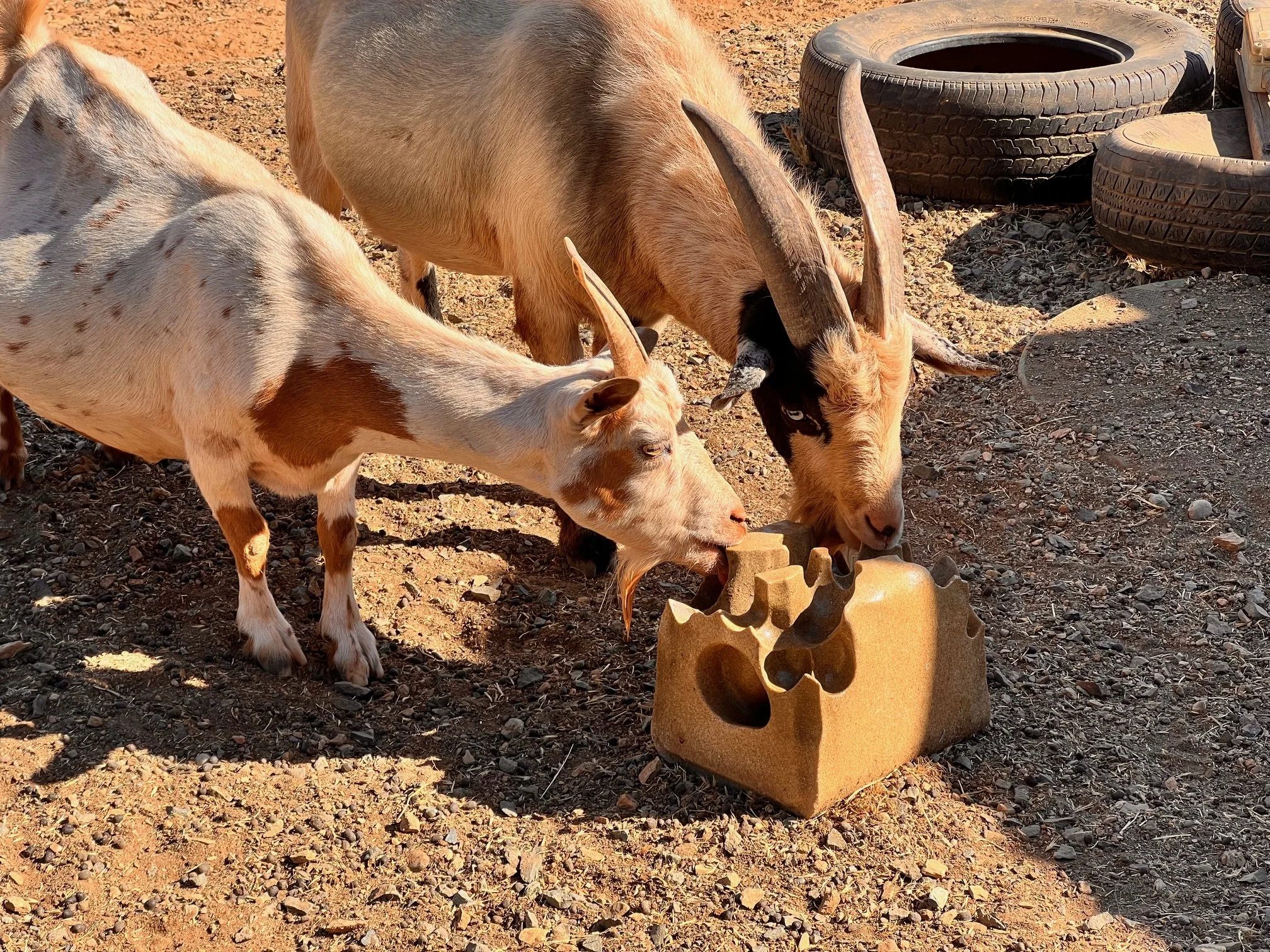
Salt blocks provide essential minerals that are missing on the grass and soil, but are essential to their diet.
Even though goats can eat the fresh green vegetation, too much of it can upset their stomachs. “Abundance of fresh pasture in a goat’s digestive system produces excessive gas, which could lead to the physical affliction of bloat, often resulting in death,” Childs (103). Hence, the need to combine the fresh greens with hay, various dry brush, and other nutrient rich foods to help balance their diet and keep them satiated. Visit your nearest feed store to find these items and get some valuable tips from your local experts.
Source: Childs, Laura (2017). “The Joy of Keeping Goats.” Second Edition.